Hey, would you like to meet up with some crazy idealistic impractical artistic folks who believe that the Twin Cities community ought to do everything possible to preserve the Minnesota Orchestra? Then you’ll want to come to this Orch-upy Minneapolis event tomorrow. Details here. Here’s the Facebook event description by organizer Sarah Jackson:
*******LOCATION: KING & I THAI, 1346 LaSalle Ave MPLS***
Friends, with the Musicians of the Minnesota Orchestra’s exciting announcement of their Gala Concert at 7:30 on Thursday, October 18th, it made perfect sense to CHANGE OUR EVENT TO A HAPPY HOUR, immediately preceding the concert!
So, we’ll meet for happy hour, discussion, and a bit of letter-writing on THURSDAY, OCTOBER 18TH @ 5:00 PM!
PS – As I believe the evening’s concert is something to celebrate, I will be dressing up for the evening! Please feel free to join me!
I don’t date, so naturally, I won’t be bringing a date. Therefore, I’d like to extend a warm invitation to Michael Henson to be my companion for the evening! What an amazing, unique, unprecedented chance for him to show his willingness to engage in an open public dialogue with those who disagree with him. Only a strong, bold, confident leader with unshakable faith in his noble plans would be able to go into the lion’s den like that. What an amazing opportunity to publicly humiliate his opposition and prove them wrong in a very very very public place. Hope to see him there! (What? It’s worth a shot.)
I’d also like to invite Mr. Campbell and Mr. Davis. We’re actually not going to be that far away from your workplaces, gentlemen!
This is a lovely little walk, Mr. Davis! You’ll enjoy yourself!
Voila. I promise we won’t bite. I’m sarcastic, often to a fault, but that doesn’t mean I don’t welcome an open, honest debate. I honestly have full faith that if you truly do have the best artistic and financial interests of the Minnesota Orchestra at heart, you will trounce me in an honest debate. And oh how I’d love to be trounced. No snark there.
Anyway. Hope to see some of my readers there, or at the least at the Convention Center. You know what I look like. I’ll be dressed in black and white. Till tomorrow. xx
Today I found out I’ll need to do a lot of re-formatting on this blog, because the link to the oft-cited “Aiming High: Michael Henson Profile” from the July 2010 Gig Magazine has officially broken.
But unfortunately for both Michael Henson and Kim Kardashian, once something is published on the Internet, it never really goes away.
So we still have this cached version… (Edit 10/29: The cache has vanished. So here are the screenshots…)
But we still have this screenshot JPG version (and a PNG version and a GIF version). And also an HTML version. And also a text version. And an RTF version, and a PDF version. And multiple other versions in multiple other formats. Which I won’t share here because that would be overkill and a possible infringement of copyright. But I have them, and I have them all. Stored in multiple places. On multiple computers. And on a flash drive, which I keep tucked in secret pocket in my purse. And all those copies say the exact same thing they said a couple days ago, a couple weeks ago, a couple months ago, and a couple years ago:
The former Bournemouth Symphony head is strategising his way through the recession – and winning.
There’s no single strategy to beating the downturn,’ Michael Henson asserts. ‘There has to be a whole series of strategies to maintain a focused approach. The priority is continuing the excellence in the artistic work.’ With orchestras across the US hard hit by the recession – and management strategies the number-one talking point at the League of American Orchestras’ conference in June – the Minnesota Orchestra stands out as a beacon institution among the bad news…
It’s almost as if Michael Henson never said those contradictory things……….. Almost.
There were 43 articles featured on the Orchestra’s 2010 tour website. As of today, 42 remain. The only one that’s been removed? The Michael Henson one. Do you think that’s coincidence? If the entire tour website had been taken down – or multiple articles had been removed – then maybe it could have been coincidence. Maybe. But just that single article? The one article that has come under very public scrutiny over the last couple of weeks? The one article that so obviously risks undermining the credibility of management’s entire message? Hmm.
Taking down this article does nothing, and whoever thought it would should not be in charge of a major orchestra’s website. Anything online is permanent. Period. Even though I may well be making a fool of myself, I’ll never try deleting any of my words here…because I’m tech-savvy enough to know that such a thing is pretty much darn near impossible…especially if someone has good reason to try to use my words against me in future. That’s simultaneously one of the prime glories of the Internet, and one of the prime dangers: despite its seemingly ephemeral nature, it is ridiculously permanent.
The sudden excision becomes even lamer when you look at the comments here. One of my readers actually said on October 3:
I suggest you get ahold of that article on the mnorch website about Michael Henson and post the text directly onto your blog. and keep another record of it somewhere. If this whole fiasco is as conspiracy-esque as we think it could be, management might start hiding more things before real info comes out. It might just be a good idea to have that article handy in case…
Sigh.
Yes. Yes, it was a good idea.
Unfortunately.
I honestly didn’t think it would come to that, but… I’m glad I followed this paranoid bit of advice, that really wasn’t so paranoid after all.
This is feeling more and more like a John Le Carré novel, and it’s kind of ridiculous. We’re in the middle of an orchestralockout, for Pete’s sake; not the frigging Cold War.
“You’ll have to assume they’re watching you… Things aren’t always what they seem!”
All this deletion does is remind the public that Michael Henson has not explained the discrepancies between his 2010 words and his 2012 words. It also gives some very potent ammunition to those who believe that management is totally, wildly, veering-on-hilariously inept…and is secretly (very very very secretly) humiliated by it. If management didn’t think Michael Henson’s words could be used to successfully undermine their arguments…then why bother deleting them now?
(Or should I say, trying to delete them?)
It makes a person wonder:
Is someone starting to feel the heat?
***
There are few things more satisfying than shoehorning a dramatic, totally irrelevant picture of Benedict Cumberbatch into your music blog.
Here’s a Strib editorial from Jon Campbell and Richard Davis entitled “Minn. Orchestra makes a stand.” It’s… Just go read it. If you’ve read this blog before, you’ll know what I think of it.
There’s not much new in it, but one new thing is a big new thing: Campbell and Davis have finally confirmed the 17% endowment draw in print. Despite my sadly limited mathematical abilities, I anticipated this number on September 25. I’m not exactly sure what the thought process was behind this small but meaningful tweak in PR strategy, but make no mistake; it is a marked departure from what has been said in the past. This is a risky, double-edged sword of a figure to publicize. Yes, it demonstrates the gravity of the situation quite neatly, but it also begs the inevitable (unanswered) question: when donors for the Building for the Future campaign were being courted in 2010, and 2011, and 2012…were they told that the orchestra’s finances were being managed so poorly that the organization was being forced to draw from the endowment at an annual rate of 17% to meet their obligations? (Because make no mistake: given the figures they’ve cited, if they were drawing at a rate of 17% in 2011, then they were also drawing at a 17% or 18% or 19% rate in 2010, too. Even I can figure that out, and trust me, John Saxon and I were never very close.) (Edit 10/29: We now have more concrete information about rate draws from 2007-2012. They aren’t quite as extreme as 17%, but they were pretty darn high.) I really wonder if donors were told, because in December 2010, Richard Davis proudly proclaimed, “This was a season characterized by disciplined budget management [bold mine] and significant expense cuts, which kept our operations stable in an unpredictable environment.” But we now have conclusive proof from Richard Davis himself that this was, to put it politely, total cow crap. (Because let’s get real: a draw rate over 10% isn’t “disciplined budget management” ……is it???) If they lied to the paper, why wouldn’t they lie to their patrons and donors? (Or to their musicians, for that matter?)
Bottom line: how many people would have donated to the lobby renovation if they’d known the Orchestral Apocalypse was coming? I’ve read comments online again and again and again from people who said they would never have donated to the hall construction effort if they’d known that a 30-50% pay cut for musicians was in the works. I haven’t heard a single donor say, “Well, if I had to choose between keeping all of our musicians in town, or building an amazing new lobby, I’d definitely take the amazing new lobby!” I mean…I’m sure there were people and companies who wanted their money to go to the hall rather than the musicians, but…I know there were lots of people who felt otherwise, too. And their concerns should be acknowledged.
Here’s an FAQ from management’s website:
Why not “re-allocate” the $47 million raised to reduce deficits instead?
The donors who have contributed to the Orchestra Hall renovation would not have contributed these funds if there weren’t a building project to support and we need to respect their intent. For example, the State of Minnesota provided $14 million (funds that we need to match) to support the renovation and these funds cannot be used for a different purpose. Similarly, many foundations and corporations have specific guidelines around capital support that our project fulfilled; this support cannot be re-allocated.
But interestingly, their answer says nothing about individual donations. I have the summer 2012 Showcase right here… There are roughly 150 individuals or couples who appear to be non-corporations who gave $10,000 or more, who presumably do not have specific guidelines around capital support, who could theoretically re-allocate their funds. Of course we’re too far along now in the renovation to re-allocate much (if anything), but… Yesterday I did some quick back-of-the-envelope calculations. On the low end, these individuals gave roughly $32 million. On the high end, they gave about $70 million. A certain percentage of that was doubtless used for construction. How many millions of dollars would be re-allocated if their donors could do it all over again? Based on the information we have now, it’s impossible to know.
I wonder… In a perfect world, where cost isn’t an issue, would management be afraid to contact these donors in a short independently conducted survey? Maybe have three questions:
1) When you made your donation, were you aware that the orchestra was drawing from its endowment at an annual rate of 17%?
2) Would that knowledge have encouraged you to donate less, or more?
3) Knowing what you know now, if you could go back in time, would you donate to the hall construction effort or request that your gift go toward other operating expenses? Or would you have chosen to withdraw your donation altogether?
I have no idea what the answers to such a survey would be, but they would be so interesting to parse.
I don’t know. Maybe these wealthy individuals knew about the high draw rate. Maybe they were all told of the likelihood of a months-long lockout and orchestra dismemberment, but they still felt the need for a hall was more pressing. Maybe every single one of them wanted their money go to a new lobby. But we haven’t heard from them except through management’s filter, so we just can’t know. However, if these big donors are anything like the small ones, there are some who are feeling awfully betrayed right now.
To sum it all up, I’m impressed that Campbell and Davis finally came clean about the 17% draw. But I’m less impressed that they didn’t answer the inevitable accompanying questions that such a high number raises, like: why didn’t you tell us this was happening two years ago?, and why did you lie to us?
While we’re asking questions about the funding for the hall, I have a couple of quick ones… Would the hall renovation have even been possible without the $14 million from the state of Minnesota? Why did then-Gov. Pawlenty, once opposed to using state funding to remodel the hall, change his mind a few weeks later (without explanation), and decide at the last minute not to veto the Orchestra Hall renovation? Interesting questions. Unfortunately we’ll never get answers to them, because the ex-governor recently left his political career behind him, likely forever, to become the CEO of the Financial Services Roundtable. You may be interested in looking at a list of that organization’s directors; a certain name will be familiar to you. Who knows what all happened there, and what (if anything) it has to do with the hall and the orchestra and the fact Pawlenty changed his mind so quickly. It’s very possible there’s nothing there there. But…oh, wouldn’t it be fascinating to know for sure?
I never donated to the Building for the Future campaign (thank goodness), but I did donate an encouraging blurb to their website, a fact which now humiliates and angers me to no end. I really feel like I was taken advantage of. Would I have taken the time to write what I did if I’d known such flagrant mismanagement and misrepresentation was occurring behind the scenes? Well, holy crap, no! Of course not! So I can only imagine how utterly cheated certain individuals who actually gave money might feel.
Are you a donor? As a donor, were you ever given a different picture of the organization’s finances than members of the Strib-reading public were in December 2010? Were you ever told about the endowment fund draws in the upper teens? Would you consider a 10%+ draw to be “disciplined budget management”? Were you ever given any indication that a months-long lockout was just around the corner? Would you have reconsidered your donation if you’d known this was all going on? Do you think money was mismanaged in any way? Or are you cool with it all? Do you feel like you were lied to? Or do you trust management to do what’s right, and to honor your intentions? No snark or sarcasm here; I’m genuinely curious.
I know that I won’t give to the Orchestra until the current leadership is gone. I just don’t trust them to paint fair, accurate pictures of their financial status. Do you blame me? I wonder how many other individuals feel the same way I do, and how this will affect the orchestra’s ability to fundraise in future…
***
PS – Oh, and also? The idea of the “playing and talking” period being over the last few months is just…stupid. Like really, really stupid. It’s not really like the musicians had a choice. They were kinda contractually obligated to play. Management is not going to win any PR points with that, and whoever thought they would is…kind of delusional.
PS 2 – And also also, I find it odd that management has chosen to put up the link to the “A change in key” Strib editorial on its Industry News page, apparently subtly endorsing it, but then refusing to actually do what it recommends. Um…
At the end of last month, I published an article that examined the value of comprehensive perspective when it comes to considering proposed changes in collective bargaining agreements. Since then, I have obtained a copy of the complete redline agreement the Minnesota Orchestra submitted to musicians as their last official offer (which was subsequently voted down on 9/29/12) and concluded it would be educational to begin examining the document here at Adaptistration.
The document has been verified as complete and accurate by official representatives from both the Minnesota Orchestra (MO) and the Minnesota Orchestra Musicians (MOM); my thanks to both groups for their cooperation.
A visual representation of what I felt like after reading Drew McManus this morning
Could it be…that…
Management is starting to care about public opinion?
Maybe?
A little?
What?
…What?
Because…
Minnesota Orchestra representatives didn’t need to agree to do this. As Mr. McManus notes, “This sort of endeavor has never been tried before mostly because obtaining a copy of a complete redline agreement, even after a contentious dispute settles, is next to unheard of.” Maybe I’m missing something very big and very obvious, but…what would management have to gain by agreeing to do this, besides possibly some public support? (And even that isn’t guaranteed, depending on how they react. If they play their cards poorly, this could end up to be a net PR loss for them.) And no offense to Mr. McManus, but the broader public doesn’t read Adaptistration. If representatives from the orchestra had declined Mr. McManus’s request, I’m guessing that only a handful of largely pro-musician people would have noticed…and at this point the majority of us is so disgusted with management that it wouldn’t have changed our tune at all. So might this mean that management is trying to reach out to the online pro-musicican set? Maybe? If not, who are they trying to reach? Why did they decide to do this? Who are the representatives from the orchestra? Do they have faith in their ability to publicly defend their contract? Is that faith warranted? Did Michael Henson okay this? Is he losing control of his chess pieces? I don’t know. But I really wasn’t expecting this, to say the least.
And then take a gander at this paragraph:
The MO and MOM have indicated a degree of willingness to provide additional insight, justification, and rationale behind why changes have been presented and/or why changes are opposed. This input will be included wherever possible; similarly, spokespersons for both sides have been invited to leave comments at any respective article to offer additional insight and clarification.
Insight, justification, AND rationale?
…
What?
I mean, yay, obviously, of course, but –
What?
*settles in*
*pops some popcorn*
This could get very, very interesting very, very quickly.
As I mentioned in the comment section of an earlier entry, I find that one of the bizarrest things about this whole bizarre conflict is the fact that an uneducated 23-year-old from Wisconsin ended up being the one who wrote the most words about it. I think that’s fricking insane. And so I can’t express how delighted and relieved I am to hear that other more experienced voices are speaking up. I look forward to their insights with gratitude.
And I’m so very glad that the person spearheading this effort is Drew McManus, who is always so calm and polite and professional. I think of him as the Nate Silver of the orchestral world. If I was planning on writing about arts disputes for a living, I’d want to write like him. We desperately need someone in this conversation who isn’t panicking that her beloved orchestra is slipping away, who isn’t personally and professionally associated with various musicians, who isn’t contemplating moving from Minneapolis if the orchestra’s quality seriously declines. As I’ve said since the beginning, the stakes are too high for me to be clear-headed. So let’s all give a round of applause to Mr. McManus for taking on this project, and let’s (this feels so weird to be saying) give a round of applause to management (wow this feels weird to be saying) for seeming to possibly try to attempt to perhaps take a little tiny step toward transparency, maybe (what did I just say?). Let’s give Mr. McManus lots and lots of views, okay? I challenge you to make this the most popular online phenomenon since Snowqueen Icedragon’s “Master of the Universe.” Maybe if we make it really popular, we could succeed in getting a film adaptation of the contract made. I guarantee you such a thing would be more interesting than the Fifty Shades movie.
Anyway. I’m not sure if this exercise will clarify much. It could clarify a lot; it could clarify relatively little. It might change minds; it might harden them. But at the very least it will be interesting. And will be the closest thing to accessible public dialogue that we’ve seen yet.
And so once again we find ourselves in a roller coaster in uncharted territory. Boy, this story has been weird.
Sorry I haven’t been posting much the last couple of days. I’ve been battling a tinge of the flu while living with and taking care of someone who has full-out Martian Death Flu. Fun times, but not conducive to analytical thought, orchestral muckraking, or sleep. I had the thought today that I should probably sit down and start work on a Lockout Week 1 post…and then I realized it’s already been seven days since the lockout started, and that judging by the calendar I should probably already be drafting a Lockout Week 2 post. Oy vey. I have been keeping the Apocalypse Index updated, though, so you can always catch up on news there, even when I’m off valiantly fighting germs.
The news highlights from the last few days:
The Minnesota musicians have balls the size of the wrecking ones at Orchestra Hall, and they are renting out the Minneapolis Convention Center on Thursday October 18 to give a concert of their own. There hasn’t been a ton of details released yet about the show, besides the fact that Stanislaw Skrowaczewski
is conducting. Apparently he’s excited to send an implicit obscene gesture to management with a kind of aplomb that only an 89-year-old can muster. I pray that there will be an encore (or at least one more concert) if the Shostakovich 5 programming rumors are true. Please, guys, please please please do not stamp on my soul by ending what might possibly be the last concert the-Minnesota-Orchestra-As-We-Know-It plays with Shostakovich 5. (And yet…we all know there is no piece of music that can come after Shostakovich 5, so I know my encore request will likely not be granted…sigh.) Anyway, assuming my tinge of flu doesn’t turn into the Martian death variety, I’m coming to the show, and you should, too. You should also donate to the musicians.
And it would probably be a good idea for you to donate to the musicians. Because I hear rumors that renting a massive auditorium in the downtown of a major metropolitan area is expensive.
After a couple days of not writing in here and gaining perspective, I’ve come to the decision that……Michael Henson and the board are still as incompetent as I thought they were a few days ago. Sorry, guys. You know what might convince me otherwise? You answering these hundred questions… Just sayin’…
A couple days ago there was an Almanac debate between the musicians’ side and management’s side, like the one between Dobson West and Carole Mason-Smith from a couple weeks ago (doesn’t it feel like years?). I haven’t watched it yet. But it’s there, and archived, and eventually I’ll get around to watching it, and discussing it…
The Star Tribune editorial was nice when it wasn’t reciting the same old talking points that we’ve rehashed and (hopefully) cast real, legitimate doubt on again and again here. Surprisingly, it ended with a call for an independent financial analysis.
Also, we also heard from a trifecta of conductors in the Star Tribune, telling management in no uncertain terms to get their crap together. I don’t think anyone at the top will actually listen to them (conductors? pshaw, what do they know about orchestras?), but hey. It’s still awfully meaningful to hear from them. A moment of silence for Osmo, who must be just in an agonizingly awkward place right now…
I installed this game that I got from Savers the other day. It’s called Trainz: Driver Edition. It sucks. Don’t buy it.
Flus also suck, in general.
The leaves came off the trees, and it’s unpleasantly cold out now. I don’t really feel like we got much of an autumn, but I’m not sure if this is because we didn’t get much of an autumn, or because I squandered it indoors blogging. I probably squandered it indoors blogging.
I’m tired. I need to try to sleep again.
So, anyway. Obviously not much substance to this post, but I just wanted to let you know I’m still alive and PO’d. In time I’ll get back to some better blogging. xx
We can pretend that you don’t know who I am. We can pretend that you and Jon Campbell and Richard Davis never got the three massive manila envelopes with my hundred questions in them that I sent to Orchestra Hall last month. We can pretend that while you were looking up your Industry News, you came across a Huffington Post blog entry and thought it fit to link to, then somehow had a case of temporary blindness and missed mine.
But that would be pretending. Because everyoneknows you know now. As of this afternoon, several bloggers’ opinions are featured very prominently on MPR’s website, and this one is among them. And you cite MPR in Industry News. (Actually, as of this writing, it was the most recent source you cited. Eek. Awkward.) Therefore, you know who I am and what I’ve been asking, and, with all due respect, Mr. Henson, you simply don’t have an excuse to ignore me – or any of us bloggers – anymore. If you choose to keep denying our existence and our questions, you choose to come across as the orchestral CEO version of Jerry Lundegaard.
Jerry Lundegaard: I told ya. We haven’t had any vehicles go missing.
Marge Gunderson: Okay! But are ya sure? ‘Cause I mean, how do you know? Do you do a count, or what kind of a routine do you have here?
Jerry Lundegaard: [growing uncomfortable with this questioning] Ma’am, I answered your question!
Marge Gunderson: [long pause] I’m sorry, sir?
Jerry Lundegaard: Ma’am, I answered your question. I answered the darned… I’m cooperatin’ here!
Marge Gunderson: Sir, you have no call to get snippy with me, I’m just doing my job here.
Jerry Lundegaard: I’m… I’m not arguing here! I’m cooperating. So there’s no need to… we’re doin’ all we can here.
Marge Gunderson: Sir, could I talk to Mr. Gustafson?
[Jerry gives her a glassy-eyed look, knowing full well that Gustafson is dead]
Marge Gunderson: Mr. Lundegaard?
Look, I’ll even take out the filtered profanity in my “Hello, Minnesota Orchestra Management!” post to entice you further. How’s that? See? You’re all set. Despite whatever angry words I may have bandied about in the past few weeks, you and the clear, concise, honest answers you’ll no doubt bring to me will be oh-so-welcome in these virtual pages. I promise. As I’ve said so many times before, my first loyalty is not to the musicians, or to unions, or to an artistically excellent orchestra set to deplete its endowment in 2018. No; it’s to a strong, transparent, fiscally sustainable, artistically excellent symphony orchestra…which I hear is a goal rather similar to the one you have!
So answer us, and answer us quickly, or you risk MPR being only the first of many mainstream news sources to actually start reporting the discrepancies and obfuscations (and maybe even lies) you’ve let slip. And we’re only…*checks calendar*…five days into the lockout. If you make enemies with bloggers as thoroughly as you’ve appeared to make enemies with your musicians, it will be very very very hard to win us back over. Who knows what we might write, what we might speculate, what we might dig out of the Star Tribune archives, what Google might yield, what Facebook links we might make go viral, if you refuse to set the record straight? I don’t think it would be wise to choose to leave anything in your grand strategic plan to chance, would it? No. It wouldn’t be fitting for a man so clearly fond of chess…who loves to control every little detail of his orchestra that he possibly can…down to which auditioning musicians are extended offers of employment, and which are not.
The Minnesota Orchestra lockout began at midnight on October 1. Early that morning, management canceled concerts through November 25. I read the official press release describing the reasoning behind the cancellations with some serious perplexion, as sentence after sentence after sentence contained obfuscations that I personally feel were very easily avoidable.
Come along and let’s take a closer look together.
The final proposal offers an average annual salary of $89,000, a guaranteed pension benefit that includes an annual contribution by the Orchestral Association of 7.63 percent of base salary, 10 weeks paid vacation and up to 26 weeks of paid sick leave.
Obfuscation #1: Professional orchestral musicians never have ten weeks of paid vacation a year. Period. “Vacation weeks” are merely “weeks the musicians do not perform with the orchestra.” During those “vacation” weeks, they are still practicing at home and studying for hours and hours a day. Musicians don’t often have vacation days, and they never ever have vacation weeks. If they go a single day without practicing, they will get twitchy, and will become highly unpleasant individuals to be around. Trust me. Management seems to be banking on you not knowing this. They seem to be leaving out facts so that they can manipulate you. They seem to be afraid to take a couple extra sentences to explain the fuller, more nuanced truth. Don’t let yourself be manipulated.
Obfuscation #2: “Sick leave” ought to be relabeled “injury leave.” Management knows that the average patron doesn’t understand what a physically demanding job being an orchestra musician is – or how often and how agonizingly orchestral musicians get hurt on the job – or that being forced by finances to play while injured can easily result in the end of careers that began in early childhood – or that insufficient rest can lead to musicians seeking wildly expensive medical care. Management seems to be banking on you not knowing this. They seem to be leaving out facts so that they can manipulate you. They seem to be afraid to take a couple extra sentences to explain the fuller, more nuanced truth. Don’t let yourself be manipulated.
Throughout the nearly six month negotiating process, the musicians have not offered a single counter-proposal.
Obfuscation #3:According to the musicians, they did not offer a single counter-proposal because they were waiting on important financial information before they felt they could make a fair and realistic offer. When that information was refused them, musicians offered at the eleventh hour to go through binding arbitration. This is an offer that is historic in its generosity on the part of the musicians. Look at the situations in Louisville and Detroit if you don’t believe me. The managements there would have killed to have the luxury of going into binding arbitration before their work stoppages even began. Management seems to be banking on you not knowing this. They seem to be leaving out facts so that they can manipulate you. They seem to be afraid to take a couple extra sentences to explain the fuller, more nuanced truth. Don’t let yourself be manipulated.
We have great respect for our musicians’ talents
Obfuscation #4. Look at obfuscations #1 and #2. If they really respected and understood their musicians’ talents, would they really obfuscate about their working conditions, and make them sound like lazy entitled children? Management seems to be banking on you not knowing this. They seem to be leaving out facts so that they can manipulate you. They seem to be afraid to take a couple extra sentences to explain the fuller, more nuanced truth. Don’t let yourself be manipulated.
The Orchestral Association honored the musicians’ 2007 contract even though, in the midst of the recession, it placed unsustainable pressure on our endowment.
Obfuscation #5. I’ve already covered this before, so I’ll just link to my longer entry explaining it. But in short, Michael Henson, the Minnesota Orchestral Association, and the board were delighted with the way things were going financially at the orchestra all the way through 2010, more than halfway through that unsustainable contract. In fact, they were so happy with how things were going that in July 2010 they posted an article from Gig Magazine tossing around such phrases as “the Minnesota Orchestra stands out as a beacon institution among the bad [economic] news.” If you want to read it yourself, feel free to go to the Minnesota Orchestra website and do so, because it’s still there. They haven’t even bothered to take it down, although it directly contradicts what they say over here. (If they do ever take it down, let me know. I’ve saved a copy on my hard drive and can upload it if necessary.) (Edit: And, whaddayaknow, they finally got around to taking it down…in mid-October, when it was rather too late. Details on this here.) Management seems to be banking on you not knowing this. They seem to be leaving out facts so that they can manipulate you. They seem to be afraid to take a couple extra sentences to explain the fuller, more nuanced truth. Don’t let yourself be manipulated.
(Also, management ignores the fact that musicians gave $4.2 million in concessions in 2009. Management seems to be banking on you not knowing this. They seem to be leaving out facts so that they can manipulate you. They seem to be afraid to take a couple extra sentences to explain the fuller, more nuanced truth. Don’t let yourself be manipulated.)
We cannot resolve these issues without significant participation from our musicians nor can we turn responsibility for the Orchestra’s future over to a single arbitrator.
Obfuscation #6. If, after the books were opened, and the proposed changes were fair and warranted, chances are, an arbitrator would impose significant participation onto musicians, and the musicians were willing to take that very real risk. Salary is a secondary sticking point in this battle. I’m going to go out on a limb here and say that if we were discussing just salary and not contract changes, we might have settled this dispute many months ago. No, this battle is about a number of non-financial contract changes or nominally-financial contract changes that “give management more flexibility” but actually have the unfortunate consequence of allowing businessmen to make vital artistic decisions. A reader who has studied the contract more carefully than I have recently pointed out this little gem to me. It’s Section 23.3, (15), about Audition Committee. It’s on page 39 here.
Yes, Michael Henson would like to be the one with final authority to “extend an offer of employment to a potential Musician.” He does not want this ultimate power to go to the musicians. He does not want this ultimate power to go to the music director. No, he wants that power to go to…Michael Henson.
Do you understand? These are the kinds of radical changes the musicians are objecting to. Many of them have nothing to do with money, and everything to do with power and sustaining artistic excellence. These are the kinds of changes that are buried deep within the 50-page contract of thick and thorny legalese. These are the kinds of changes whose implications have yet to be fully understood by the public, because our press is overworked and there is not a single expert reporter working on this story full-time. Question: would anyone with an orchestra’s best interests at heart really want to have Michael Henson tasked with extending offers of employment to musicians, without having to be held accountable to anyone else? That has nothing to do with money. Management seems to be banking on you not knowing this. They seem to be leaving out facts so that they can manipulate you. They seem to be afraid to take a couple extra sentences to explain the fuller, more nuanced truth. Don’t let yourself be manipulated.
Since 2009, the full-time management and administrative staff have experienced a salary reduction, a wage freeze and more than a 40 percent reduction of their pension contributions from the Orchestral Association.
Obfuscation #7. According to public documents, Michael Henson makes $404,000 a year, which is up from his 2009 salary of $390,000. (According to this Star Tribune article, Salaries drop for nonprofit leaders, this is 1.5x the average for “nonprofits with budgets of $25 million to $50 million,” which is $243,000.) I know that others within the organization have sacrificed, and sacrificed greatly, but based on the available public evidence, I’m not convinced their leader did.Shouldn’t great leaders lead by example? Of course Henson’s salary alone wouldn’t fix the financial problem management says they have, but it would send a message about his character. It would send a message about his humanity, and respect, and shared sacrifice. As Andrew Young once observed on the Colbert Report, strikes aren’t about money; they’re about respect. Also, let’s be clear: I don’t think any of the musicians are scorning the people who wield relatively little power within the organization, who have suffered terribly throughout this whole debacle. According to one of my readers, at least one of these hardworking underpaid people was fired via email. If this is indeed true (and I have heard no one dispute it, or apologize for it), do you believe that high-level management really cares so much about the people below them? Or might they instead be seeing them as pawns in a grand seven-tier chess game (as nationally renowned arts consultant Drew McManus feared back in May)? No, this is a failure of leadership from the very top: from powerful multi-multi-millionaire board leaders Jon Campbell and Richard Davis, and Michael Henson. Management seems to be banking on you not knowing this. They seem to be leaving out facts so that they can manipulate you. They seem to be afraid to take a couple extra sentences to explain the fuller, more nuanced truth. Don’t let yourself be manipulated.
“We have been transparent with our musicians over the last three years about the substantial financial challenges facing the organization and the need for change in this new economic climate,” said MOA Board Negotiating Chair Richard Davis.
Obfuscation #8. Once again, I direct you to the article I wrote, wondering if the orchestra has indeed been transparent about the substantial financial challenges facing the organization. Because several articles from 2008-2010 would indicate they were not. They were certainly not transparent to the press, and they were certainly not transparent to their patrons and their donors. Management seems to be banking on you not knowing this. They seem to be leaving out facts so that they can manipulate you. They seem to be afraid to take a couple extra sentences to explain the fuller, more nuanced truth. Don’t let yourself be manipulated.
The musicians’ 2007 contract, which expired on October 1, included an increase of 19.2 percent to musician base salary over the life of the five-year contract.
Obfuscation #9. Financiers like Jon Campbell and Richard Davis may be interested to learn of the existence of a thing called “inflation.” Pesky thing, inflation: it throws a wrench into the simplest of calculations. The rate of inflation in 2007 was 4.1%, in 2008 was .1%, in 2009 was 2.7%, in 2010 was 1.5%, and in 2011 was 3.0%. 2012 numbers are obviously unavailable, but so far look to be about 2.3%. That’s an approximately 13.7% rate of inflation over the life of the contract. That’s a mere 5.5% raise above the rate of inflation over the course of five years, or in other words, a little over one percent a year. And during that time, the Minnesota Orchestra has solidified its reputation as one of the greatest orchestras in the world. I don’t know about you, but I personally believe that when you distinguish yourself professionally in an internationally cutthroat scene, you deserve every single penny of your 1% annual raise above the rate of inflation. Maybe management wasn’t able to afford the contract they signed in 2007, and maybe they can’t afford it now, but they can’t imply their musicians haven’t deserved that increase in pay. Management seems to be banking on you not knowing this. They seem to be leaving out facts so that they can manipulate you. They seem to be afraid to take a couple extra sentences to explain the fuller, more nuanced truth. Don’t let yourself be manipulated.
We must be very respectful of our donors and ticket buyers; gifts and ticket sales alone cannot be expected to bridge our financial gap.
Obfuscation #10. Yes, management must be very respectful of their donors and ticket buyers, but they aren’t being very respectful of their donors and ticket buyers. Their donors and their ticket buyers have invested their hard-earned cash in a very specific product. In doing so, there was an implicit trust that the high quality of this very specific product would be sustained. Pretend someone sold you a ticket to see the Super Bowl and you dropped a lot of cash doing so ($14 million in the case of the state taxpayer; or $2.61 for every man, woman, and child in Minnesota, the vast majority of whom will never set foot in Orchestra Hall). Imagine buying your Super Bowl tickets, being escorted into the stadium…and then seeing two local high school football teams warming up on the field. Such a transaction would be the height of disrespect and obfuscation. I’m qualified to say so, because over the last five years, according to publicly available documents, I’ve spent a higher percentage of my income buying Minnesota Orchestra tickets than Richard Davishas donated to the Minnesota Orchestra. If the quality of the orchestra had not been so stellar, would they have gotten as many donations as they did, and sold as many tickets as they did? If they had been trying to sell a first-rate new lobby for a second-rate orchestra, would they have succeeded in their $100 million quest to “build for the future”? I don’t think they would have, and I don’t think management thinks so either, because the orchestra always prominently features that famous Alex Ross quote wherever they go: “the greatest orchestra in the world.” So at some subconscious level, they must understand that they need that kind of world-class quality to pull in that kind of money. And Michael Henson needs that world-class quality to get the money to pay his world-class salary.
For the final time:
Management seems to be banking on you not knowing this. They seem to be leaving out facts so that they can manipulate you. They seem to be afraid to take a couple extra sentences to explain the fuller, more nuanced truth. Don’t let yourself be manipulated.
So there are ten obfuscations right there. Some are obviously more blatant than others. I could dig in and explain more, but once you get to a certain point, further dissection and discussion become overkill. When you have a 765 word press release, and can find 10 obfuscations within those 765 words, that’s a ratio of obfuscations to words of 1:77, or a demonstrable obfuscation every few sentences. If I can’t trust the orchestra’s press releases, do you blame me for not trusting anything else they say? Especially when the organization is resisting independent financial analysis, refusing to go through binding arbitration, and contradicting what it says in public about its finances? And never taking the time to explain the discrepancies?
Musicians may well have to sacrifice, and sacrifice a lot, to keep this mighty organization afloat. But we can’t know for sure until the obfuscations stop.
This open letter was originally written in October 2012 and last updated 27 August 2013.
***
Dearest readers,
I’ve been getting a lot more views since the Minnesota Orchestra lockout began, and I thought I should put up an entry introducing myself, since so many of you are new.
First off, welcome! My name is Emily; I live in Eau Claire, Wisconsin (that’s ninety miles from the Twin Cities, for those of you who aren’t from these parts). I’m 24 and a freelance violinist, violist, writer, historian, and wannabe musicologist. More details on my professional background here. I’m disabled and trying to save up for college, so as of right now, the only education I have is a high school diploma and what I’ve been able to pick up on my own. I’ve blogged about my musical visits to Minneapolis for a couple of years now, but, although I’ve known since spring 2012 that these negotiations would be unusually contentious, I was determined to keep my nose out of any labor disputes for the simple reason they made me sad. But then someone at the Minnesota Orchestra very rudely and suddenly shut down the Inside the Classics blog with the lamest entry that site had ever seen, and I got angry, and I started to write. And write. And write some more. You mess with the Minnesota Orchestra? You mess with me. (By the way, the Minnesota Orchestra has since nuked the blog, as well as its archive…completely unnecessarily. Stay classy, Minnesota Orchestra. Stay classy.) Since the lockout began, this blog has gotten international attention, which is both flattering and, honestly, a bit terrifying. I have no experience analyzing complicated orchestral politics, much less analyzing complicated orchestral politics with people I’ve idolized for years watching me, so I’m relying on my dear readers to nudge me in the right direction if I start veering off-course. (And they have, too, which I’m very grateful for. Thank you, readers!)
I’ve been going to Minnesota Orchestra and SPCO concerts since I was thirteen. Continue reading →
The other night while waiting for lockout news, I decided to prove my nerdiness by comparing the two contracts the Minnesota Orchestral Association (MOA) has offered its musicians. They’re on their website, and you can find the first one here (Contract A) and the second one (the “final offer”) here (Contract B). So I opened up two Adobe Reader windows and went line by line through both fifty-odd-page documents, determined to find where management had agreed to compromise, and by how much. I may have missed some small changes here and there; if I did, alert me, and I’ll add them to this entry. But I’m pretty confident I caught the majority of them. This is actually the first orchestral contract I’ve read in full, and so I’m obviously not qualified to discuss the implications of all the changes, but when I did have something to say, or questions to ask, I wrote a little paragraph underneath the screen shots. I’d appreciate if someone fluent in legalese could discuss the implications of the changes.
Change #1
So they added in the dates. Nice.
Change #2
Change number two…also consists of adding in dates.
Change #3
So it looks like in Contract A, musicians are to work no fewer than 38 weeks and no more than 42 weeks. Contract B alters that to just plain old “shall be expected to” work 42 weeks.
Change #4
Discussions of community outreach. It goes from “in any season” to “in any 42 week season.” Management also adds in an (s) after rehearsal.
Change #5
Here are some free days built into Contract B that were not in Contract A.
Change #6
A change in the number of musicians allowed in split orchestra situations…
Change #7
This is in Contract B; it is not in Contract A…
Change #8
This looks like it has to do with vacation time re: the switch to a 42-week year, and as such, I think it’s more of a clarification than a compromise…
Change #9
Equations like this bring back memories of crying in my eighth-grade algebra class, so I’ll leave analysis of this to more qualified individuals…
Change #10
Changes in Internet broadcasting provisions…
Change #11
Glad that Contract A’s (e) was changed. That strikes me as being a huge potential loophole: “nothing in this Agreement shall be construed to limit the Association’s ability to promote the orchestra through current and evolving social networking/social media forums.” Does that mean that the MOA could post videos or concert recordings onto, say, Facebook or Myspace (or whatever social media site explodes in the next five years) without paying its musicians, as long as it was done for “advertising purposes”? I wouldn’t be averse to videos or concert recordings being available online, but the musicians would need to be compensated in some way for that. However, I know the laws dictating digital media are complicated and in flux, so I may well have interpreted that wrong. I’ll update this paragraph later if someone else can clarify. (It does seem to be a moot point now in this particular situation, though.)
Change #12
Here it appears that individual musicians won the ability to receive higher payments for recording sessions. That only seems logical…
Change #13
This sentence is only in Contract B, and strikes me as being one of the most interesting changes of all. On the Minnesota Orchestra Musicians website, I’m counting 15 first violins (with two on leave of absence), 9 second violins, 10 violas (with one on leave of absence), 10 cellos (with two on medical leave), 6 bass players, 4 flutes, 3 oboe, 4 clarinet, 4 bassoon, 5 horn, 4 trumpet, 2 trombone, 1 tuba, 2 timpani, 3 percussion, 1 harp, and 3 librarians (with one as a substitute). That adds up to 86, with two of those players now in the Oregon Symphony, one in the San Francisco Symphony, and none of the three very likely to return. And then the one substitute librarian. What happens when the number dips below 84, as it looks guaranteed to do even if nobody leaves? (And I can guarantee you, people will leave…) Will management face any consequences for failing to hire new players, or be forced to agree to an accelerated schedule of auditions to fill vacancies to keep the orchestra at the magical 84 number? Or is this a largely symbolic provision with no teeth to enforce it?
Change #14
And…another change having to do with dates.
So in a 52-page contract, we have approximately 14 fleeting changes (although your exact number will vary depending on if you feel the changes should be counted per sentence, per paragraph, per line, per section, etc). Three of those changes have to do with dates. So really there are only about 11 changes. Compare that to the 250+ changes the musicians say management has made from the old contract. So I don’t think it’s unreasonable to assume that management’s Final Offer is probably about 95% of what they originally wanted, change-wise.
Have you guys ever watched Pawn Stars? If we translated the negotiation of the changes within this contract into a Pawn Stars segment, it would go something like this:
Rick: Wow, here’s a valuable car I really, really, really want to buy. It’s amazing. Wow. This is world-class stuff right here. Yes, I’m very interested. What do you want for it?
Client: I was thinking $10,000.
Rick: WHAT? Um, no. No, no, no, NO, NO, NO. Absolutely positively no way. How about $100?
Client: Sorry, what?
Rick: $100. Sorry man, times are tough.
Client: Can you, um, do any better than that?
Rick (five months later): Here is my absolute final offer.
*suspenseful music plays*
Rick: It’s totally respectful and realistic.
*more suspenseful music*
Rick: I will give you 5% of what you want. So $500.
Client:(backs away slowly)
Rick: What is your problem? I’m so disappointed you aren’t working with me! I’m being reasonable and generous and incredibly respectful! Why are you driving away in your awesome car that I said I totally wanted??? Why doesn’t anyone want to negotiate with me??? Fine. Whatever. I’ll just close the shop till Thanksgiving while continuing to pay myself $1100 a day. See if I care. Geez.
This would be the worst TV show ever. (And I’m including Here Comes Honey Boo Boo in that appraisal.)
Well, regardless of the exact percentage of changes, here’s the inevitable question:
If you have only 11 relatively minor changes to share, why would you post two separate 50-page PDF documents? Or, phrased another way, why wouldn’t you post a short errata to make your positions as clear as possible?
It couldn’t possibly be to confuse Joe Patron, who is most likely elderly, and probably doesn’t know how to work Adobe Reader, or tile the windows on his computer so he can read both documents at once, and probably doesn’t have good enough eyesight or the physical ability to sit and spend a couple hours skipping back and forth between the two contracts for fifty pages. It couldn’t possibly be to give Joe Patron the impression that management is engaging in good-faith dialogue and agreeing to lots of substantial changes, when really there are only a handful of them. It couldn’t possibly be to overwhelm a local news media that’s already overwhelmed with negotiation news and simply doesn’t have the time or resources to devote to comparing the two contracts.
Because management would never ever do that to its devoted public, right? The very same public who makes Michael Henson’s $404,000 annual salary possible, right? Nobody could possibly do that in good conscience…could they?
This week is when the crap really starts hitting the fan in regards to the Minnesota Orchestra and St. Paul Chamber Orchestra negotiations. Or, as it’s known around these parts: Orchestral Apocalypse ‘012. Here’s a comprehensive discussion of what all happened in Week -4, Week -3, and Week -2. Warning: this situation has become so complicated, so political, so bizarre, that if you’re just starting to pay attention now, you’d be well-served by reading the entirety of my Tumblr, which includes the discussions of what happened in the various weeks, as well as all the editorials I’ve written. Yes, I understand that’s a lot of reading, but to be fair, a lot of crap has happened lately.
25 September 2012 (published a day late; sorry)
A lot of information has come out lately. Here are some articles you can read at your leisure…
I’m disappointed that the media isn’t talking more about working conditions and managements’ visions for the future. These are not just squabbles over money, although you’d never guess it from the majority of press reports.
I’m not sure why Minnesota management refused to allow their musicians to address the board, especially since there were already plans for management to convene that evening…? I’d like to hear from them about that. Why wouldn’t you at least make the show of meeting with them? You wouldn’t have to actually listen to them, if you didn’t want to. You could play with your new iPhone and tune them out. But then at least afterward you could say you met with them when they offered to reach out to you. This just seems like an easily avoidable PR failure. (One of many, unfortunately…)
After this latest barrage of press reports, I feel like I’m understanding better why there has been no counter-proposal from the Minnesota musicians: they want more answers about the organization’s finances before they can decide what would be a reasonable proposal. I think that’s a totally fair request. Having just dug into some old articles, and found some pretty serious discrepancies in management’s attitudes (and numbers) between 2008 and 2010 and 2012, I believe the musicians are more than justified in asking for an independent financial analysis. In fact, I feel that donors should be clamoring for an independent financial analysis. (If I was Julia Dayton, I’d be making some very angry calls to Orchestra Hall administration after what management has all said over the past few weeks…) Once again, management, you’re free to step forward and clarify, either here directly or through the press or through your website. But until you do, I have to deal with the facts on the ground, and the facts on the ground say that the musicians have good reason to feel confused…and betrayed.
26 September
Remember how on the 24th SPCO management rejected the musicians’ proposal (details above)? That consisted of “a first-year guaranteed pay of $73,000 for the first two years, with an increase to $77,000 in the third year. They also asked for no change in the size of the orchestra, increased pension contributions in the third year and increased seniority pay throughout the contract,” according to the Pioneer Press. Well, the musicians have tried again…
The musicians agreed to further salary cuts that would bring the minimum annual salaries down to $70,000 for the first two years of the contract and $75,000 for the third…
In order to avoid reducing the orchestra’s size from 34 players down to 28, the musicians have asked management to take the money set aside for buyouts and apply it toward the operating budget.
“They’ve told us 16 musicians are eligible for a buyout,” said Carole Mason Smith, chair of the musicians’ negotiating committee. “That money should (be used) to preserve the orchestra rather than dismember it and start all over again.”
In addition, the musicians have offered to perform up to eight free concerts specifically for fundraising events.
I’m guessing the musicians feel fairly confident about this offer, as they’ve posted the entirety of their contract up on their blog, which they’ve never done before. Waiting on management’s response now… (One wonders where the money that management wanted to use for buyouts came from. Has anyone explained that? Right now, judging by press reports, it seems it just magically appeared. Abracadabra!)
I’ve been feeling for a few weeks as if the situation in St. Paul is slightly less bleak than the one in Minneapolis, and hopefullythis proves it.
Speaking of the bleak situation in Minneapolis…
The situation in Minneapolis is bleak.
Yesterday Minnesota management offered their ominously titled Final Proposal, which makes a generous effort to compromise by…not really compromising much at all. Management is still claiming they want a $89,000 average salary. (Really, guys? You couldn’t even come up to, say, $90,500 to at least give a vague impression of compromise? A $1500 raise in the proposed average salary would only cost you roughly $135,000 more a year. [The exact number would vary depending on how many musicians would be in the group.] Michael Henson alone could cover the vast majority of that if he agreed to a 30% pay cut.) But I guess they did offer some clarifications and some changes in working conditions, and that’s…something. I guess. Not sure what those exact changes are yet. Musicians are still reviewing the document. Hopefully we’ll hear from them soon. I’m not optimistic about their response.
Richard Davis said:
“Nearly six months have passed and we have yet to receive from our players a counterproposal or even any indication of their priorities,” he said.
*politely raises hand* Um, Mr. Davis, I’m not sure where you’ve been over the last few months, but since you’re clearly just joining us, allow me to be the one to inform you that the musicians’ first priority is an independent financial analysis because the things you have said about the state of the orchestra’s finances contradict themselves. We have Google now, people! You can’t expect us to forget what you said in 2010! How are the musicians possibly supposed to know what their priorities are if they don’t even know how much money the orchestra may (or may not) be sitting on? It’s like someone saying, “Well, I’m not sure what my income currently is, or what it will be in future, but I do know with absolute certainty how much I can afford to spend on food, clothing, shelter, insurance, transportation, and everything else!” That’s the talk of a deranged mind. And a banker of all people should know that. Hell, maybe if you agreed to run an independent financial analysis, and the numbers came back that you’re saying will come back, who knows what could happen? Maybe the musicians would agree that your proposal is reasonable, and the only possible way to save the organization, like you’ve been telling us all along. Then maybe we could all move the crap on.
We also heard why management does not want an independent financial analysis:
unnecessary delay and duplication of efforts
…
One word for this: lame. On second thought, three words: lame, lame, and lame. Management doesn’t cite the cost (the thing my naive self assumed would be the stumbling block); they cite “delay” and “duplication of efforts.” Well maybe if you’d agreed to an analysis a few weeks ago, we’d be that much closer to getting the results! And maybe if you’d agree to an analysis, the musicians might temporarily accept your terms while the calculations are going on! And maybe if you’d agreed to an analysis, you could silence devoted patrons who are going so far as to wonder out loud if you’re engaging in fraud (comment section)! What would the down-side to such an analysis be, besides the inconvenience of “delay” and “duplication of effort”? It would make your musicians happy, as it would presumably answer the questions they have which they say you’re not answering. It would make negotiations less tense because everyone would be on the same page. It would be a net gain for management, as it would make the musicians look incredibly petty for being so obsessed with independent financial reviews lately. If nothing else, management could at least answer some questions about why you guys said you were doing so swimmingly in 2010, when now you say you were actually drowning in 2010.
Until further notice, I’m assuming there’s something fishy going on. Given the publicly available facts, what else am I supposed to think?
“If they want more conversation this week, we are here to find a resolution,” he said.
You guys didn’t seem to be interested in conversation the other day when you rejected a request for the musicians to give a presentation to the board…
Well, in the meantime…if you’re lonely and need someone to talk to about finding solutions to your orchestra’s countless intractable problems…you’ve always always got me and my Hundred Questions… Just saying. :) <3 xx
Here are the articles that came out today, so you can read all the details and try judging for yourself what’s happening…
Board Chair Jon Campbell expressed regret at the Board and Management’s handling of the endowment funds over the past ten years, noting that they had been unhappy with the advice they had acted upon and had to change investment advisers. Campbell also admitted that the Board and Management had been wrong in 2007 regarding their investment predictions.
After lunch, Musicians asked questions related to the most recent endowment charts, with the main question being: Where does the $97 Million that the Board has raised thus far (in the Building for the Future Fund) fit into the total endowment structure? The Board and Management did not answer [editor’s note: lol], but said they would provide that information later…
Finally, Musicians requested to speak to the entire Board of Directors at that evening’s meeting, and be given an opportunity to offer their morning presentation. The Board and Management rejected that request.
Well, this is not a day of events I’m looking forward to summarizing. And it probably will only get worse from here on out. I knew it was bad when I realized I was in the mood to listen to a lonely mournful lumberjack singing sad incomprehensible lyrics…in falsetto.
In a statement late Wednesday, Sept. 26, SPCO president Dobson West called the proposal a “very small step forward” that does not provide any material savings and places the financial burden on the orchestra’s audience and donors.
Did he really need to qualify “a step forward” with the condescending “very small”? At this point, it seems as though any small step should be considered a giant leap. Because if you’re making any kind of progress at all after nine months, frankly, that’s a miracle. This new contract is taking as much time to gestate as a human baby.
What the SPCO musicians’ contract would look like by now if it was human
While I’m on the subject of the SPCO (which I haven’t been on very often lately) I wanted to throw in my two cents about memberships: they’re ridiculously, criminally cheap. How about offering something like two months of free concerts, to see if you’d even be interested in attending, and then after that, increasing the price of a membership to $10 or $12 a month? I’m living way below the poverty line, and I’d be happy to pay $7.50 (the musicians’ offer) or $10 or $12 a month for access to world-class concerts. Honestly, I’d pay $20, but music is obviously the most important thing in my life, so I’m a skewed sample. But surely people who are really interested and invested in the orchestra, who are told that an increase in the cost of membership will go directly to keeping that orchestra intact during difficult financial times…surely those people would be willing to pony up an extra $2.50 a month? If they don’t feel invested enough in the orchestra to pay that little bit more a month…would they really then bother coming to the shows? I have a very hard time believing they would. And isn’t that the whole point of the membership program…to cultivate new audiences? Not people who come once or twice and then stop… People who come and then keep coming. People who feel invested in the quality of what’s happening onstage. People who will support the other people (also known as the “orchestra”) onstage.
I don’t feel comfortable running all the calculations on how much this proposed contract will save the SPCO because I don’t have the expertise (or time) to wade through all the numbers, but I’d be interested in seeing management’s math on that one. There’s a letter on their website about the 24 September negotiations, saying that the union’s second proposal only saved $100,000 over the three-year life of the contract, but none has been posted about the musicians’ most recent proposal. Maybe that will come later. Or maybe they’re waiting until after this weekend to unveil the numbers. I don’t know.
Also, why has Mr. West not explained the $1.6 – $3.2 million – not sure of the exact number – which has been made available for the 16 musician buyouts? Once again, I’m so curious to hear where that number came from, when, how, why, etc. I don’t think he’s mentioned the background on that…has he? Have you heard anything about it? Let me know if you have.
This proposal represents a significant stretch for the Society and our donors. Our donors have spoken loud and clear: there is no additional funding available to support the status quo and in fact, current funding levels will not be sustained for the status quo. Significant additional funds will be available, however, for real transformation – an orchestra of exceptional artistic quality with our fixed expenses in line with our sustainable revenues, with the flexibility to meet a rapidly changing environment and with fair and respectful compensation for our Musicians, at rates we can afford.
I wish we could hear from these donors. I haven’t heard from them in the press, and I would very much like to. I would like to hear them explain in their own words why they feel the status quo is unsustainable, and if they feel the artistic quality of the orchestra will decrease as a result of these specific cuts, and also their qualifications for making such assessments. I wonder if there are any large donors who are expressing concern about a possible sharp decrease in quality and cohesion…? You’d think there would be. Many small donors have.
Also, a respectful base salary for a new musician in an ensemble that aspires to be one of the greatest chamber orchestras in the world is not $50,000 a year. Especially not in a state where the median income is about $57,000. Sorry. That’s not much more than the musicians would earn if they were teaching privately full-time. Actually, with their training, they could probably make more money teaching full-time, especially if they supplemented with other performance opportunities. According to this website, $50,000 is about what a subway operator, sales representative, or librarian makes a year. And no offense to those good folks, but they didn’t invest hundreds of thousands of dollars into their education and career starting at the age of five. I don’t see how you could realistically aspire to be a super-selective elite world-class musical organization while offering a salary that is not much different to one a teacher could make. What would keep those whip-smart musicians from opting to teach…or heck, becoming very musically talented subway operators, sales representatives, or librarians?
My last hope: management in St. Paul is actually secretly willing to agree to the majority of items in this proposed contract, but they’re waiting for the next set of talks to see how much they can squeeze out before the contract deadline. And then the conflict will end and rainbows will shine and unicorns will fly. Naive? Probably. But I want good news. I’m to the point where I’m getting pissed at other people’s good news, and that’s never a good sign. Chicago Symphony ends their strike? My first grumpy thought: why can’t our strikes last a day?Referee lockout over?Minnesota management would never compromise… Teachers’ strike over? How’d they come to an agreement? What’s their secret? Lucky bastards!
Last night I read about the Atlanta Symphony musicians agreeing to the deep cuts management had proposed…and it devastated me. Especially when I went to the Atlanta Symphony’s Facebook page, and saw their breezy, wildly wildly inappropriate status update: “Let the music begin! A new contract has been ratified and the 2012-13 season will open on October 4. See you soon!” Hey, you know what, Atlanta Symphony? F*** you! It made me wonder what the end-game in Minnesota will look like (ugly, probably), and when it will come. It’s clear that management doesn’t respect their musicians, or even understand what the word “respect” means. How can we as a community show that as passionate music lovers we do? How can we pressure all those who have treated others so rudely to go away? How can we encourage incompetent people to step down, and competent ones to step up? How can we patrons help to rebuild whatever long-term damage may result from the toxic environment that managements have so unnecessarily fostered? How do we make sure we don’t become so entrenched on the musicians’ side that we can’t recognize healthy compromise when we see it? I want to know what I can do to help. I want to keep as many of these people in the Twin Cities as I can, and I want them to have careers that are as satisfying to them as those careers are to me.
For a laugh, here’s the most useless discussion I’ve read yet about this entire fiasco. (And trust me, I’ve been in the Strib comment section, so I’ve read some useless discussion.) I mention it here solely for entertainment’s sake. It starts with the assertion that (I’m paraphrasing) “hey musicians, you’re spoiled, coddled, childish brats – but no disrespect intended!”…and it goes on from there. We hear that “when the rich have money, they give it away. When they lose money, they don’t.” This makes total sense, since according to the New York Times, in the United States, “The bottom 99% received a microscopic $80 increase in pay per person in 2010, after adjusting for inflation. The top 1 percent, whose average income is $1,019,089, had an 11.6 percent increase in income.” Yes, that certainly does explain why orchestras have been doing so well post-2010! And then we also hear that Minnesota has “canceled opening concerts due to lack of funding or, due to unresolved contract negotiations, enforced a musicians’ lockout.” Fascinating. Someone has clearly opened a portal to the future! Can I hop through to see how this all ends?? There may be some worthy points hidden deep in the essay…somewhere…but in the face of such monumentally lazy writing, I’m not keen on making the effort to dig them up. Dear commentators: if you are going to write stuff like this, or post stuff like this, please make sure the text you’re about to post is free of fundamentally basic errors. Otherwise, you lose your audience before you begin, even if you do have some good points to offer. Surely Mr. Lebrecht knows that Minnesota isn’t actually locked out (yet). If he doesn’t, that’s unsettling, because even I know what’s happening at all the major orchestras, and I don’t comment on orchestras for a living.
In an attempt to get away from all this frustrating news, I watched a couple Daily Show episodes, and watched this interview with Bill Clinton. And I was surprised to find that what he said applies, in a certain way, to this whole orchestral apocalypse. Bolds mine, obviously.
I think… Just forget about politics. Just think about any time in your life, [when] you’ve been confused or angry or frightened or resentful or anything and you didn’t know what was going on. In those moments, explanation is way more important than eloquence, and rhetoric falls on deaf ears. So the only chance I had to get anybody to really listen was to say, “Here, look, this is what I think happened – boom boom boom boom – and one of my favorite responses came from a guy, he said, I’m a conservative Republican, and I never voted for Clinton. I never even thought he was eloquent. But he treated me like a grown-up, and I appreciated that. I felt like we could sit down and have a conversation. People need to be told… The American people are plenty smart enough to figure all this out…
So I wanted to try to explain that in simple terms. No one else would do that. No one…unless you were being driven by ideology instead of by evidence… This is a practical country. We have ideals – we have philosophies – but the problem with any ideology is that it gives the answer before you look at the evidence. So you have to mole the evidence to get the answer you’ve already decided you’ve got to have. It doesn’t work that way. Building an economy, rebuilding an economy, is hard, practical, nuts and bolt work. You have to look at what the competition is doing; you have to look at what the factors resisting growth are; you have to look at the strengths of the country. This country has enormous assets that most of our competitors don’t have…
This economics is not ideology. It’s hard work. And it’s seeing what the competition’s doing, it’s analyzing the alternatives… [Jon Stewart: Results-oriented. Merit-oriented.] Yes. That’s what America needs. We need to get the show on the road here and stop allthiskindofmindlessandfact-free fighting.
Yes, management, I’d be so appreciative if someone could treat musicians and concerned patrons like intelligent adults for once. If someone could answer our questions, and trust us enough to engage in a dialogue, and not leave out inconvenient facts, and not act like our concerns are baseless or naive or irresponsible, and not be condescending or adversarial. That would be so d*** lovely. Thanks.
Sooooooooooooo, looks like the Minnesota Orchestra is headed toward a lockout. They meet on Saturday on whether to accept the contract (I’m going to go out on a limb here and say the vote will be NO), and are requesting to meet with management on Sunday. After that…let the silence begin!
And so we’ve come full-circle. I offer you some melancholy music:
*drinks more alcohol*
Head on down to the comment section if you want to engage in some group therapy.
28 September
Not too much news yet this morning, besides this excellent blog from Drew McManus called “Keep Your Eye on the Details in Minnesota.” He notes that management’s transparency concerning their new contract is actually not very transparent at all, since there’s no old contract to compare it to. Amen. Personally I find it insulting that management thinks anything on their website clarifies anything, besides maybe the fact that they think we’re dumbs***s with the reasoning capabilities of five-year-olds. (Idle question: do you think Mr. McManus’s blog will appear under “Industry News“? Or is his blog not as reputable as the anonymous writer’s from the Huffington Post?) (Also: notice that under “Industry News”, management still has a link to an article, “Chicago Symphony Orchestra musicians on strike”…days after Chicago came to an agreement. Apparently in Minnesota Orchestra management’s world, that strike is still bitter and ongoing. If that isn’t a blatant example of “mol[ing] the evidence to get the answer you’ve already decided you’ve got to have”, I don’t know what is.)
While I was over at his blog, I hopped over to Mr. McManus’s entry on Atlanta’s concessions, and read this about the St. Louis unrest of 2005…
For example, in St. Louis, the executive overseeing their bitter labor dispute in 2005 left shortly thereafter and following that departure labor relations, along with the organization’s overall health and vitality, began to increase.
I thought this was relevant to the Minnesota situation because a few days ago there was an article in the Star Tribune that drew parallels to the St. Louis dispute, saying that things are better now, and implying they might improve quickly in Minneapolis, too. Well, no wonder the situation is better in St. Louis; it wasn’t made clear in the Strib article that their executive departed. I’d think that before you really start healing the wound, you’d have to kill all the bacteria causing inflammation…right? (And yet Detroit didn’t change leadership after their whole fiasco. So who knows. Might be too early to tell what would be the best course of action. And obviously the situations are different at each orchestra, depending on the power structure, politics, available resources, community, etc., etc.)
Soooooooooo….once again we come around to the question: how can we hold those who are accountable for this toxic atmosphere responsible?
I wanted to share a little anecdote from my personal life… I was speaking the other day to my grandparents about what’s happening with the Minnesota Orchestra. I summarized the situation as neutrally and briefly as possible, explaining that management wanted to cut base salaries by $40,000; that management raised $100 million over the last few years for a fundraising campaign; that what they’ve said over the last couple of years about the orchestra’s financial status contradicts itself; that they are not making an effort to answer questions about those contradictions; and that they have repeatedly refused requests from their musicians for a second opinion on their financial status.
“Well, if I win the Powerball, we’ll give them money,” my grandpa said.
My grandmother’s eyes flashed. “Oh, no, we won’t! Not if they’re mismanaging their funds like that!”
If my grandparents put together the pieces in thirty seconds…might the broader public do the same thing, too…whether there’s any truth to the assumption or not?
30 September (2AM)
I just got home from performing a concert and having a post-concert dinner out and I don’t have time to write much, but I thought I’d leave this here for any morning viewers. (Because I am sleeping in tomorrow! woohoo!)
Also, I see someone found this blog today looking for “minnesota orchestra musicians.org 100 questions”. Was it management? Helloooooooooo! Management! We’ve got tea brewing for you! Come back!
The eve of the apocalypse seems as good a time for ever for me to repeat something I haven’t said for a while, and that’s I’m pre-emptively sorry. I’m sorry to anyone I’ve hurt, offended, mis-characterized, misjudged, misunderstood, during the course of the whole fiasco. Unlike certain members of management (cough), I don’t view myself as an infallible human being (since, you know, I’m not). I’m viewing this whole mess from the sidelines via Internet reports, and I obviously don’t have the whole story (stories?). (To be fair, I’ve acknowledged that from the very beginning.) I’m also very upset right now. I’m in music because of the example these people have set for me. I haven’t met most of them, and yet they’re some of the most influential people in my life. And of course anyone who sees their heroes being threatened immediately gets testy and defensive, sometimes unreasonably so. (I’m sure even Michael Henson, Dobson West, Jon Campbell, and Richard Davis would!) A certain lack of perspective in such a situation is sadly inevitable. I also tend to lash out with sarcasm when I’m pissed, and then come to regret it later. Soooo, if you ever think I’m flying off the handle, please be clear and say so, and pull me aside and tell me that I need to take a step back for a bit. I’d appreciate that. I’d appreciate it even more if you could do it politely, because my nerves are rather frayed right now. Thank you kindly, darlings. I’ll try my best to keep my temper under control and to stay open to all respectful, reasonable positions.
I also want to remind people that as this conflict gets more and more and more (and more) technical over the coming weeks (months?), I’m going to be less and less and less (and less) qualified to understand what’s really going on. (Only someone with the qualifications of, say, Drew McManus will be able to read the tea leaves with any authority, and that will likely be difficult even for him, since he’s just as much of an outsider to this situation as I am.) So remember to take everything I say with not just a grain of salt, but with a salt mine, as I said in an earlier entry. I started this blogging project a month ago knowing absolutely nothing about how orchestra contracts are negotiated. Although I’ve been dropped into an intense crash course on orchestral politics, and I’ve learned a lot in a short amount of time, I still don’t know a tremendous amount about how the whole labyrinthine system works, and so I’m learning as I go along. (Embarrassingly publicly, as it turns out…) But I hope you’ll be patient and come along with me, anyway. Experts out there, feel free to weigh in. The comment section is always open. As these situations get more and more complicated and emotional, I’d like for this blog to be less me blabbing and offering my snarky profane non-expert opinion, and more of a place for concerned patrons to gather and discuss and ponder in a reasonable intelligent way…since management has sadly refused to provide such a place for us. The Musicians of the Minnesota Orchestra website can’t really be much of a clearinghouse, either, for obvious reasons.
(Which isn’t to say I won’t resist sharing my opinions entirely. Surely y’all know by now I’m incapable of not sharing opinions! ;) )
More of those non-expert opinions thoughts tomorrow. Hope you had sweet dreams last night. It’s 2AM here, so probably time for me to head to bed. I’m hoping for dreams of a happy resolution, where we discover that the Twin Cities can somehow love and support two world-class orchestras.
30 September 2012
Well, last night’s early-morning entry is looking a bit prophetic on my part, as the Minnesota Orchestra musicians have just announced their intention to seek binding arbitration to settle their contract dispute, and this is the first step in this entire drama that I feel wholly unqualified to speak a single word on. I think I last heard the phrase “binding arbitration” in my ninth grade civics class, and that was nearly ten years ago, so for those of us who need a little refresher course…
Binding Arbitration: The submission of a dispute to an unbiased third person designated by the parties to the controversy, who agree in advance to comply with the award—a decision to be issued after a hearing at which both parties have an opportunity to be heard.
Arbitration is a well-established and widely used means to end disputes. It is one of several kinds of Alternative Dispute Resolution, which provide parties to a controversy with a choice other than litigation. Unlike litigation, arbitration takes place out of court: the two sides select an impartial third party, known as an arbitrator; agree in advance to comply with the arbitrator’s award; and then participate in a hearing at which both sides can present evidence and testimony. The arbitrator’s decision is usually final, and courts rarely reexamine it.
Lots of people have strong opinions about unions and binding arbitration. When you Google “binding arbitration union”, there’s lots of stuff about binding arbitration and public sector unions. (A lot of people who don’t like public sector unions don’t like binding arbitration; many claim the decisions that come out of arbitration are too favorable to them.) So I tried “binding arbitration union -public.” Here’s an article discussing how American Airlines unions sought binding arbitration earlier this year; it claims that unions usually don’t like binding arbitration. (But in this particular instance, American was nearing bankruptcy, which, as I understand it, could have led to the possibility of the airline being able to reject the union contracts entirely, so in this case, binding arbitration was better than nothing.)
There’s less when you look up “binding arbitration union orchestra.” The first story that comes up is the great Louisville Symphony Debacle (LSD). There, however, it was management who suggested binding arbitration, and then only after many months of contentious negotiations. Detroit musicians offered binding arbitration only after five difficult months of striking, and only reluctantly. In March the musicians of the Pittsburgh Symphony signed a contract that allows for musicians and management to enter binding arbitration if they disagree on salary in 2014. Other than that, I can’t find record of a group of professional orchestra musicians who have offered binding arbitration before the work stoppage actually started. Let me know if there was one at some point, because I’m not finding it.
Feel free to take a moment to giggle at my lack of knowledge. At least I admit my limitations. And can Google.
I don’t know if this is the case or not, but it feels as if the musicians knew this was coming…doesn’t it? It feels as though they – or their PR team, or both – have studied other orchestras’ meltdowns and are making their decisions with their missteps in mind. The one time during this whole fiasco that I felt they were thrown maybe a little bit off their game was back when management released their contract without telling them. By being the ones to first mention the possibility of playing and talking, and the first to suggest binding arbitration before the lockout even began (an option the Louisville and Detroit managements would have loved), that really makes the musicians look ready for reasonable compromise, and demonstrates an affection and concern for their audience…an affection and concern we haven’t heard much of from management. I’ve also been very happy over the last few days to see the musicians really clarifying why they haven’t offered a counter-proposal (because they lack the necessary information to make an informed one). That explanation has been in nearly every article lately, and it’s good to hear; for a long while there, I think it just seemed to casual readers as if the musicians were unwilling to engage, rather than merely waiting on a request for financial information.
And before we’d barely had time to swallow this, much less digest it, we hear that management has rejected both the orchestra musicians’ offers to “play and talk” and to go through binding arbitration. Waiting to hear a response from management now… I can’t wait to hear Michael Henson come up with new and exciting ways to demonize the men and women whose talents he relies on for his exorbitant paychecks! Bless their hearts, but Davis and Campbell aren’t quite as entertaining on the hypocrisy scale.
Popcorn, anyone?
I wonder: if Minnesota board wanted to come across as the most incompetent, most oblivious, most tone-deaf entity imaginable, what would they do differently? Maybe hire outside musicians a la the LSD situation, but otherwise… Not much. (And you know, at this point, I honestly wouldn’t be surprised to see them trying to hire outside musicians. The effort would fail miserably, but I can see management trying it in some capacity anyway, since they don’t really seem particularly concerned about the quality of the orchestra. I pray to God this doesn’t actually happen, but if it does, I urge all qualified players to show up for the job and then launch into your best impersonation of the Portsmouth Sinfonia. Then maybe, if we’re very lucky, we could get Anna Karkowska to solo with the Minnesota Replacement Orchestra! And then we could force management to sit through two hours of it! On second thought, let’s make it ten! While we’re employing non-union musicians, we might as well make the most of them! Hey, let’s do the Ring Cycle for kicks, with no breaks in between, and see how low our artistic quality can get! It’s the Orchestral Quality Limbo Stick Game! Catchphrase: how low can you go while you’re locking out the very best? Fun for the whole community! Woohoo!)
I feel badly about this, but I’m starting to feel the SPCO story slipping away from me. I’ll still keep posting links to articles about the situation, but things have flown back and forth so quickly lately there that I’m forgetting what offer was made when and what was said and who wants $77,000 here and who wants $50,000 there and was that base or including overscale or proposal number two or rejected proposal number three, etc., etc., etc. My brain can’t keep up with the limited amount of time I have to blog. That doesn’t mean I support the musicians or the organization or an equitable solution to that crisis any less; I just feel I have less to say about it, because I don’t pretend to be knowledgeable when I’m not. Maybe if the SPCO comes to an impasse, I’ll get time to breathe and study the details of what has all been going on there lately. However, for now I think I’m going to have to focus primarily on Minnesota situation; I’ve just spent more time with it lately, and it’s easier for me to keep up with. Of course if you want to discuss the SPCO meltdown in the comments, you’re welcome to, and I’ll try to engage with you as best I can!
I’m going to start a new page called “Orchestral Apocalypse Index.” It will consist of links to all the pro- and anti-management articles and blog entries I’ve found. That way you can have the tools you need to begin making decisions about who and what to support, and you won’t need to wade through my wordy profane blather. If the article is halfway intelligent, and not just some anonymous dude on his blog going “zomg lyke musicians suckkk and r wayyyy 2 overpAID”, I’ll include a link to it. Additional submissions of links to blogs or articles I may have missed will be welcome in the comment section. So keep an eye out for that.










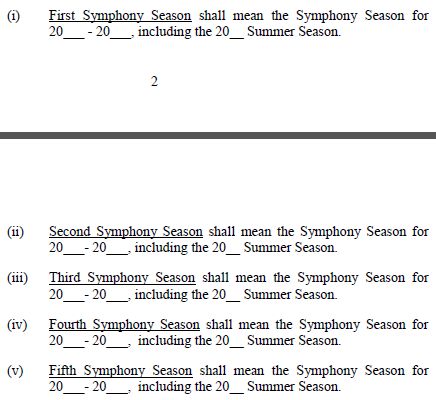
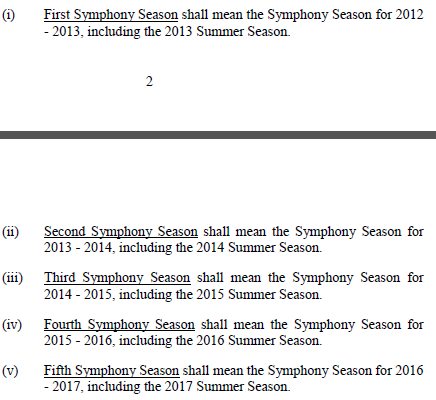
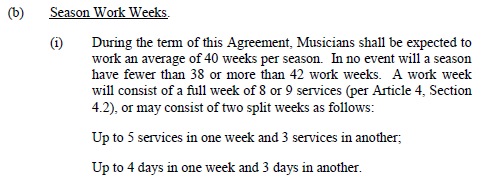
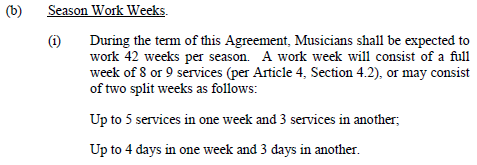
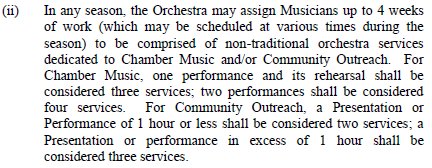
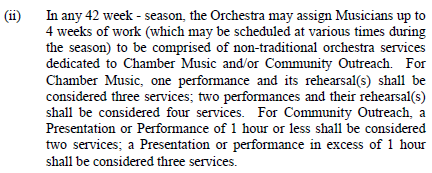



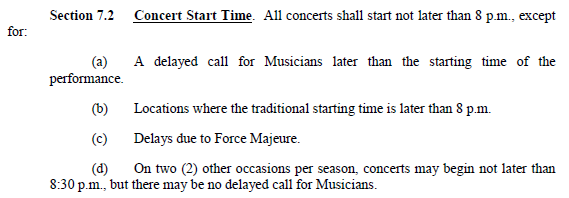
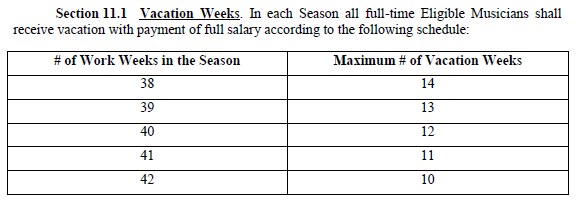

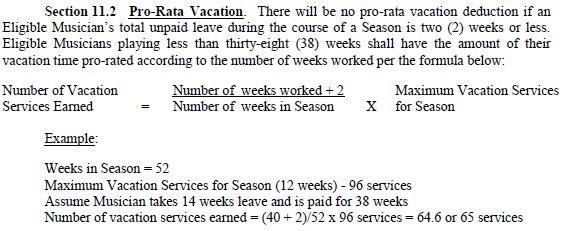
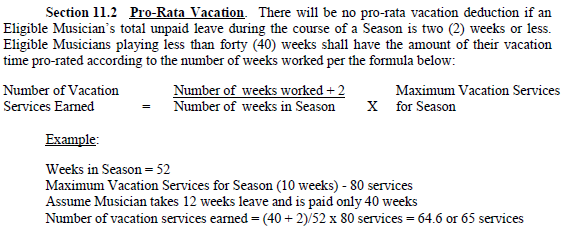
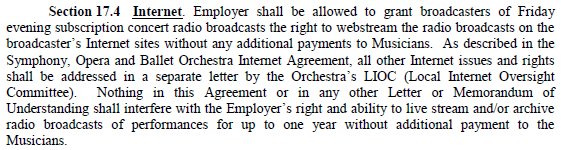
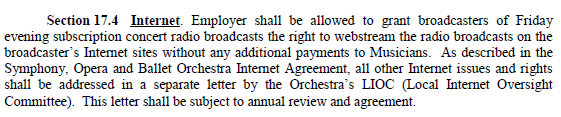
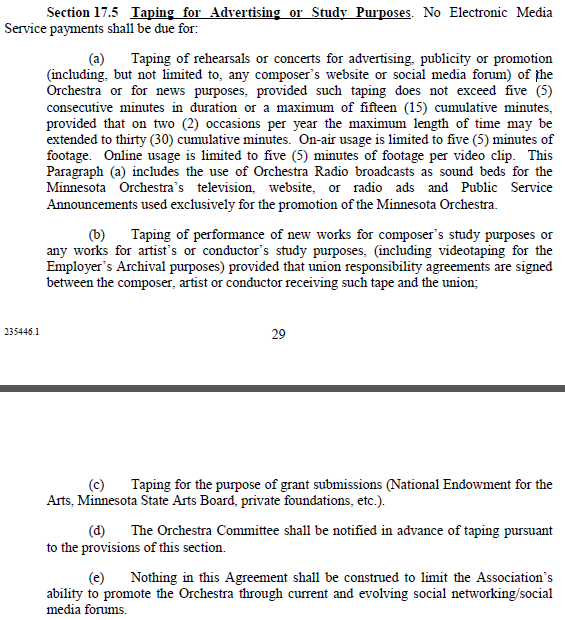
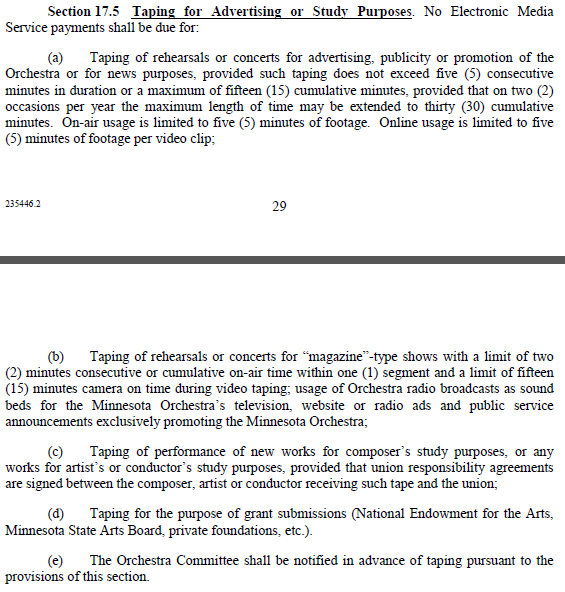
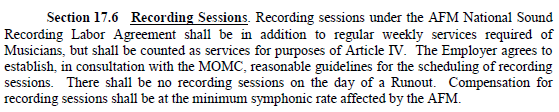
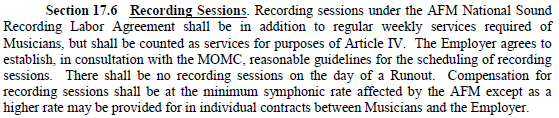







 Song of the Lark